



A seller opening a 3rd local store in Thailand under the same business license received a secondary-review rejection notice reading “Legal representative document information is inconsistent with the registration entity.” The seller meticulously verified the spelling of names character by character, resubmitted repeatedly, and was still rejected. The real bottleneck was not a typo—it was a passport with less than 12 months of remaining validity, while the cross-border store registration process does not verify passports at all. This scenario highlights a core judgment: the first divergence between cross-border and local stores is not a backend button, butthe registration entity, payment entity, and logistics entityacross the three-layer cross-validation logic. Until these three layers are aligned, any discussion of store-cluster scale, AHR scoring, or Black Friday registration eligibility is spinning its wheels.
Three-Layer Cross-Validation: Where Cross-Border and Local Stores Truly Diverge
Breaking down the three layers: the registration entity layer determines which store type you can open in which country—cross-border stores require only a Chinese business license + legal representative ID, while local stores must match the local document system (Thailand: BCD company registration + director passport; Vietnam: 13-digit tax number + legal representative ID; Malaysia: SSM business registration + local director). The payment entity layer determines the fund flow: cross-border stores route through third-party channels such as 17track and PingPong, while local stores use local bank accounts. The logistics entity layer determines fulfillment tracking callbacks: cross-border stores rely on platform partner logistics, while local stores use local 3PLs or self-managed logistics.
Why does the 3rd store most often expose a payment-entity threshold breach first? When the first 2 stores share a single payment account, the platform’s cross-comparison tolerance is relatively high. The 3rd store triggers the threshold on the number of payment accounts under the same controlling person, and the platform runs a unified validation across the three field groups—registration entity, payment entity, and logistics entity—where any misalignment in any layer triggers a rejection. For a dimension-by-dimension comparison of cross-border vs. local stores on registration documents, payment settlement, and logistics SPS, refer toWhat Exactly Sets TikTok Shop Cross-Border Stores Apart from Local Stores.
Thailand, Vietnam, Malaysia: Quantity Limits and Hard Document Discrepancies
Under the same business license, cross-border stores are typically limited to 1–2, while Southeast Asian local stores are capped at 1–3 per country. However, the true constraint on the quantity limit is not the number of licenses but the threshold of three-layer cross-verification across the registration entity, payment entity, and logistics entity. The hard differences in registration documents for local stores across the three countries determine the high-frequency triggers for second-review rejections:
| Country | Cross-Border Store Limit | Local Store Limit | Core Registration Documents | Top 3 Second-Review Rejection Reasons |
|---|---|---|---|---|
| Thailand | 1–2 stores | 1–3 entities | BCD company registration + director passport + Thai local tax ID | ① Passport validity < 12 months ② Legal representative name does not match BCD registration ③ The 3rd entity triggers duplicate registered entity |
| Vietnam | 1–2 entities | 1–3 entities | 13-digit corporate tax ID + legal representative ID + local bank account opening | ① Tax ID does not match business license entity ② Legal representative ID expired ③ Receiving entity limit exceeded |
| Malaysia | 1–2 entities | 1–3 entities | SSM business registration number + local director IC/passport + local tax ID | ① Local director's identification documents expired ② SSM number does not match the registered entity ③ Logistics entity not aligned with local 3PL |
The complete decision logic for the quantity boundary of multiple stores in one country—including whether you can continue opening stores after switching entities and how the three-tier thresholds intersect—see How Many TikTok Shop Cross-Border Stores Can One Business License Open. For a word-by-word review of second-round audit documents and a self-check list for legal representative verification, refer to 5 Common Reasons Why TikTok Shop Second-Round Audit Documents Are Rejected.

How Store Type Selection Rewrites AHR Weighting, Black Friday Registration, and Logistics Tracking
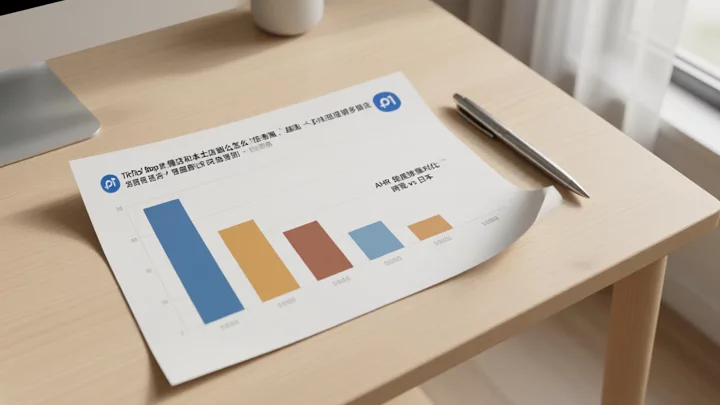
Under the AHR 150-point threshold, cross-border stores and local stores have different scoring weight structures: local stores carry a higher share for local logistics fulfillment scores (illustrative relative metric 60), with returns processed via local 3PL tracking feedback; cross-border stores carry a higher weight for customer service response time (illustrative relative metric 50), logistics must go through platform-designated channels, and tracking feedback depends on TikTok's official logistics nodes. Once a logistics violation or false shipment is triggered, the SPS health score drops sharply, and other stores under the same receiving entity will also suffer cascading AHR score deductions.
The hard metrics for Black Friday and 11.11 mega-sale registration also branch: local stores require a local receiving account + a logistics compliance rate of ≥ 95% over the past 30 days; cross-border stores have slightly looser thresholds but logistics tracking must go through platform-designated channels and third-party 3PL switching is not allowed. For a troubleshooting sequence when multiple stores simultaneously face SPS drops and second-round rejections, refer to Troubleshooting Checklist for SPS Health Score Drops and Second-Round Rejection in TikTok Shop Multi-Store Operations.
| AHR Dimension | Cross-border Store | Local Store |
|---|---|---|
| Logistics Fulfillment | 40 | 60 |
| Customer Service Response | 50 | 25 |
| Return Handling | 30 | 35 |
The 48-hour self-check sequence before launching multi-country stores
Turn the three-layer structure above into an actionable cross-reference checklist, progressing through four stages — Entity Layer → Funding Layer → Fulfillment Layer → Environment Layer — checking off each item within the 48 hours before launch:
- Entity Layer (Day 1 AM): Cross-check the validity period of business license copies country by country; remaining validity of legal representative documents (passport / national ID / IC) must be ≥ 12 months; country-specific tax numbers (Thailand BCD tax ID, Vietnam 13-digit tax ID, Malaysia SSM registration number) must exactly match the registered entity name; verify whether the number of registered stores under the same controller has hit the platform's multi-store threshold.
- Funding Layer (Day 1 PM): For cross-border stores, confirm country coverage of receiving channels such as 17track / PingPong; for local stores, confirm that local bank accounts in Thailand / Vietnam / Malaysia have been opened and the account name matches the registered entity; check whether multiple stores share the same receiving account (funding-chain cross-matching is the second most common cause of second-round rejection); verify whether the entity bound to the withdrawal card is identical to the receiving entity.
- Fulfillment Layer (Day 2 AM): Local 3PL contracts must cover the target countries and support tracking-data pushback to the TikTok Shop backend; cross-border stores must use the platform-designated logistics channels (no switching to third-party carriers); pull logistics compliance-rate data for the past 30 days — store types below 95% must be brought up to standard before registering for major promotions; confirm that the logistics entity, registered entity, and receiving entity have no cross-contamination.
- Environment Layer (Day 2 Afternoon): Multi-profile isolation on a single workstation (browser fingerprint, IP binding cooldown); TikTok Shop sub-account permission matrix segmented by role to avoid cross-contamination from logistics operations; whether the TikTok Ads account is independent of other stores (Business Center Role and Permission Management allows centralized control); whether the entity that opens the advertising account matches the store entity.
For hands-on details on multi-profile isolation and sub-account permission matrices at the environment layer, refer to Running Multiple TikTok Shop Store Clusters on One PC: Practical Guide to Multi-Store Environment Configuration and Group Management; for the overall setup logic of a Southeast Asia local store matrix, see TikTok Shop Southeast Asia Local Store Matrix: Registration Documents and Group Management for Multi-Store Setups in Thailand, Vietnam, and Malaysia.
Frequently Asked Questions
After reaching the local store limit for a country under a single business license, can you switch to a new entity to continue opening stores?
Yes, but the new entity must be fully independent — the registration entity, payment entity, and logistics entity must all be switched. Merely changing the legal representative's name while the payment account remains under the original controller's name will cause the platform's cross-referencing to flag it as the same controller, rendering the switch ineffective. After changing the entity, you must re-undergo the secondary review; country-specific document requirements remain unchanged.
Can local stores and cross-border stores share the same TikTok Ads account for running ads?
Not recommended. When the TikTok Ads account entity differs from the store entity,the TikTok advertiser account policyrequires advertiser behavior to align with the actual operating entity. Local stores use local ad accounts (Thailand, Vietnam, and Malaysia each have different onboarding processes), while cross-border stores use cross-border ad accounts. Mixing them will trigger ad account restrictions. Permission management for multi-store ad accounts can be centralized through the Business Center role feature.
If one store in a multi-country store group experiences a sharp SPS drop, will the Black Friday registration eligibility of the other stores be frozen?
It depends on the level of sharing. If multiple stores share the same payment entity or logistics entity, the cascading review triggered by the SPS drop will initiate platform re-verification of the shared layer, and other stores' Black Friday registration eligibility may be temporarily frozen until verification is complete. For stores with three-layer independence (registration, payment, and logistics each isolated), one store's SPS issue will not affect the others. See the self-audit sequence above for the troubleshooting order and 48-hour stop-loss actions.
What are the two rule changes in the 2026 TikTok Shop new policies that affect Southeast Asian local store matrices?
First, the local store logistics tracking requirement has been tightened from 'update within 7 days' to 'first tracking event within 48 hours + full-route node reporting'; stores that fail to meet this standard will see their AHR logistics fulfillment score directly downgraded. Second, the verification criterion for the total number of stores (cross-border + local) under the same controller has changed from 'by license count' to 'three-layer cross-deduplication by registration entity + payment entity + logistics entity.' Previously, opening 2 cross-border + 2 local stores (4 total) under 1 license was no longer considered compliant by default. Refer to the latest announcements on each site's backend for specifics, and verify the latest version on the 'Policy Updates' page in Seller Center before opening new stores.

