



On Day 1, you submit the 2nd cross-border store registration using the cross-border store template, and the documents pass on the first attempt. On Day 2, you paste the same business license, legal representative passport, and logistics contract directly into the Thailand local store #3 registration page; the second review rejects it after 48 hours, and the backend only states 'legal representative ID information inconsistent with registered entity.' On the morning of Day 3, you log into the dashboard and find that the first 2 stores' SPS has synchronously dropped to 78, and Black Friday AHR 150-point enrollment eligibility has been frozen—because under the same settlement entity, 3 stores share a logistics tracking pool, and store #3's unshipped orders dragged the overall fulfillment rate past the threshold. Applying a cross-border store document template directly to a local store is the most frequent error in matrix operations; the cost is not just filing one more form, but having to realign the entire review chain and cost structure.
Three-Layer Entity Logic: Why Two Store Types Go Through Different Review Channels
The divergence between cross-border stores and local stores lies not in the number of form fields but in the fundamentally different cross-validation methods across three layers: registered entity, payment-receiving entity, and logistics entity. A cross-border store starts from a Chinese entity, with logistics handled via cross-border dedicated lines or overseas warehouses and payments routed back to domestic accounts. A local store must be anchored to a local entity or a local authorization letter, with logistics using local 3PL and payments flowing through local currency accounts. If any of the three layers is misaligned, the second review will be rejected on the grounds of "entity inconsistency," and other stores' SPS under the same controlling entity will be reviewed in coordination within the same time window.
| Verification Layer | Cross-Border Store (Taking the Thailand Marketplace as an Example) | Local Store (Taking the Thailand Marketplace as an Example) |
|---|---|---|
| Registered Entity | Mainland China Business License + Legal Representative's Passport/ID Card | Thai local company tax ID, or a local authorization letter signed by the Chinese entity + local director/agent identification |
| Payment Recipient Entity | Cross-border receiving account (CNY/USD), consistent with the business license entity | Thai baht bank account, the account name must match the local store's registered entity verbatim |
| Logistics Entity | Cross-border dedicated line / overseas warehouse, tracking includes international segments | Thai local 3PL (e.g., Kerry, Flash, ThaiPost), tracking includes domestic segments only, contract must be signed by a local company |
For a detailed country-by-country comparison of this framework, see Differences Between TikTok Shop Cross-Border Stores and Southeast Asian Local Stores, and Second-Review Document Comparison. If you are already operating multiple stores in one country and have more than 4 stores, it is recommended to also read Sub-Account Permissions and Multi-Store Grouping Plans for Day-to-Day Management of TikTok Shop Store Clusters, mapping the three entity layers to the permission boundaries of each sub-account.
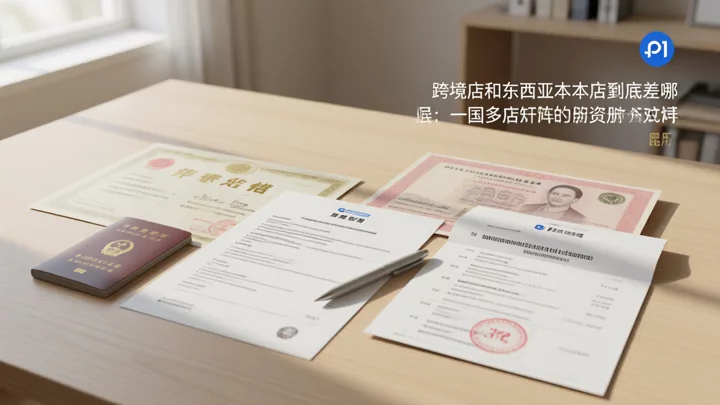
The additional mandatory documents for local stores in Thailand, Vietnam, and Malaysia
From the cross-border store documents, what can be directly reused is the business license, legal representative ID, and payment account proof. However, local stores in each country require an additional set of "local compliance documents"—missing even one will block the second review:
- Thailand: Local company tax ID (ภ.พ.03 or the legal representative's personal tax ID), proof of THB bank account opening (with the last 3 months of transaction records), a logistics contract signed with a local 3PL (must bear the company seal), and the return address must be within Thailand. A legal representative passport with remaining validity of ≥ 12 months is a hard requirement; if not met, the entire application is rejected and the second-review window for all other stores under the same entity is frozen.
- Vietnam: Local authorization letter (notarized, must include a Vietnamese translation), VND payment account, local Vietnamese return warehouse address, and VAT registration confirmation. The authorization letter's validity period must align with the store onboarding cycle; 30 days before expiration, the platform triggers a document re-verification.
- Malaysia: SST service tax registration number, MYR bank account, local return address (must use a Malaysian postal code), and SST filing records (last two quarters). A cross-border store can collect in RMB, but a local store must settle in MYR, adding an extra layer of FX risk.
The item-by-item differences between the above document requirements and the cross-border store, along with a checklist of "what can be reused and what must be re-prepared," can be found in Second-Review Materials and Multi-Store Grouping Logic for Building a Southeast Asian Local Store Matrix contains a country-by-country comparison table.
One Cross-Border Store vs. One Local Store: Five Monthly Costs Broken Down into Specific Ranges
The core of the cost difference is not that "a local store is always more expensive," but that the money goes to entirely different places. Cross-border stores enjoy logistics scale advantages but face stricter ad account restrictions; local stores have cheaper logistics, but compliance maintenance (tax ID renewal, local return warehouses, SST filing) represents ongoing expenses. Below, a relative index (cross-border store logistics fulfillment = 100 as the baseline) illustrates the magnitude comparison of the five cost items (illustrative relative indicators, not representing actual statistics):
| Cost Item | Cross-Border Store (Relative Index) | Local Store (Relative Index) |
|---|---|---|
| Logistics Fulfillment | 100 | 52 |
| Payments & Currency Exchange | 48 | 72 |
| TikTok Ads Account Setup and Campaign Delivery | 40 | 68 |
| Sub-account Permissions and Compliance Maintenance | 38 | 78 |
| AHR Maintenance and Creator Outreach | 35 | 62 |
Reading: cross-border store logistics 100, local store 52 — the local store uses a local 3PL, and per-shipment cost is approximately 5 tenths of the cross-border dedicated line, but the return chain is shorter. Payments and currency conversion work in reverse: the local store involves local currency settlement + exchange rate fluctuation + compliance filing, with costs approximately 1.5 times those of the cross-border store. For TikTok Ads, the cross-border store has its ad account tied to the store entity in Business Center, so account review is stricter, but if the account is restricted, it can be Business Center Roles and Permissions Assets are handled separately within the framework; local stores require opening accounts under a local legal entity, and the recovery cycle after restrictions are imposed is longer. Sub-account and compliance maintenance is the single heaviest ongoing burden for local stores: local tax ID renewal, SST quarterly filings, and return warehouse leasing all demand sustained headcount. For AHR maintenance, local stores must source creator invitations from the local creator pool, with commission structures and content compliance standards that differ from cross-border stores and an independent operational cadence.
From 1 Store to 3 Stores: Which Costs Scale Linearly and Which Are Step Jumps
Logistics contracts can reuse the same 3PL agreement when scaling from 2 to 3 stores (linear), and opening an additional payment sub-account is also a linear operation. However, the probability of second-review rejection does not grow linearly: when the 3rd store under the same business license is submitted, the platform pulls in cross-validation of the first 2 stores' SPS records, logistics tracking completeness, and receiving-entity consistency—any deficiency in one store amplifies the rejection risk for the 3rd store. The SPS linked score-deduction window works the same way: with 2 stores, a violation by one affects only itself; once 3 stores share a logistics tracking pool, a single store with no tracking update for 48 hours drags the overall fulfillment rate below the threshold, triggering SPS deductions for the other two stores and even a Black Friday enrollment freeze. Hitting the AHR 150-point threshold in a 3-store matrix is a step jump: each additional store adds one more parallel track of creator invitations, content compliance, and fulfillment timeliness that must be maintained simultaneously, so per-store ops headcount scales not ×3 but closer to ×4 (because entity-alignment check frequency tightens as store count increases).
The four isolation boundaries that must be set within the matrix:Receiving accounts split by entity(Cross-border stores use RMB/CNY accounts; each local store uses an independent account in its corresponding currency);Logistics tracking kept independent(Each store is bound to a separate 3PL contract; tracking data is not pooled across stores);Sub-account permission matrix(Permissions are allocated by operational unit rather than by platform role; all sub-accounts are reclaimed the same day a former employee leaves);Ads accounts and Business Center assets split per entity(Each store maintains independent ad assets, so one store's restriction does not drag down the entire group).
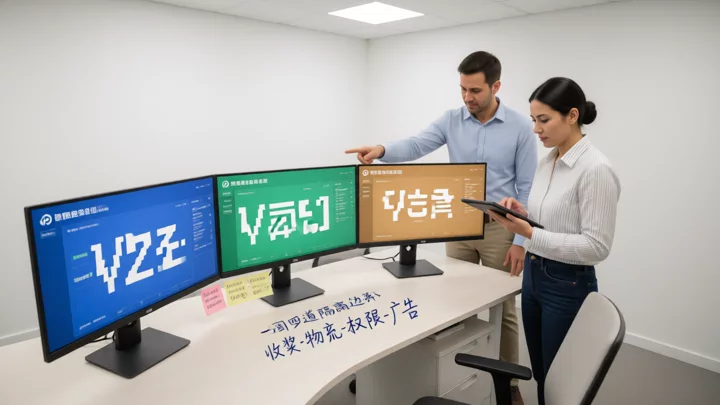
Five details that frequently cause breakdowns in matrix operations
- Local store business license / tax ID expiring without renewal: If the Thailand local company tax ID annual audit or the Vietnam authorization is not updated 30 days before expiration, the platform triggers a full-matrix document review, and secondary review channels for all stores are frozen for 7-14 days, during which no major promotion registrations are permitted
- Cross-border store logistics tracking not updated for 48 hours: After pickup via the cross-border dedicated line, tracking was not returned. The platform classifies this as "false shipping" rather than "fulfillment timeout," deducting 8-12 SPS points. Local stores under the same entity that share the tracking pool will also see synchronized point drops. See Troubleshooting Checklist for Second-Review Rejections and SPS Point Deductions.
- Sub-account permissions not revoked: After the operations staff member departed, their sub-account still retained logistics operation and order export permissions. A misoperation by the former employee triggered a batch shipping anomaly. SPS deductions are attributed to the store rather than the individual, affecting the overall AHR of the store.
- Local store ads halted after the TikTok Ads account was restricted: The cross-border store's Ads account, due to the Advertiser Account Policy violation, is restricted. If the local store's ad assets are linked under the same Business Center, the local store's paid traffic drops to zero before recovery, and organic traffic cannot offset the commission loss.
- Multiple stores in one country without grouping cause confusion in major sale application materials: When applying for Black Friday or Double 11, each store's AHR scoring is independent. However, if the backend has no store grouping, operations easily paste the cross-border store's logistics delivery-time commitments into the local store's application when submitting materials on the unified dashboard. The review fails and one rejection record is already logged.
How many stores can one business license actually register, and how is the matrix cap calculated
The number of stores on TikTok Shop under the same business license is capped separately by store type and country: cross-border stores are limited to 1–2, while Thai, Vietnamese, and Malaysian local stores are each limited to 1–3. The real constraint on quantity is not the number of licenses but whether the three-layer entity cross-verification passes in full within each country. For example, when the 3rd Thai local store is submitted, the platform checks whether the first 2 stores have SPS ≥ 80, logistics tracking completeness ≥ 95%, and a consistent receiving entity. If any single criterion is not met, the 3rd store is rejected outright. For detailed quota tables and compliance boundaries, see How many TikTok Shop cross-border stores and local stores can one business license register, and their caps.
Frequently Asked Questions
After a local store is rejected in its second review, will the cross-border stores under the same business license be affected?
No direct penalty points are applied, but it triggers a cross-verification window. Within 72 hours of rejecting the local store, the platform pulls the SPS, logistics tracking, and payment records of all stores under the same entity for a consistency check. If the cross-border store's own metrics are healthy, it is usually unaffected; however, if the cross-border store's SPS is already below 80, it may be flagged for an additional review after the check, during which major sale applications are frozen.
In a multi-store matrix within one country, is the AHR scoring pool calculated per store or per entity?
Per store. Each store accumulates AHR scores independently (logistics timeliness, content compliance, influencer invitation completion rate, return rate), with no shared scoring pool. However, for Black Friday AHR 150-point qualification, the platform checks at submission whether any store under the same entity is in an SPS anomaly or second-review rejection status. If so, the registration channel for all stores under that entity is temporarily frozen until the anomaly is resolved.
After a cross-border store's TikTok Ads account is restricted, can the local store's ads continue running?
It depends on the asset mounting structure. If the local store's ad assets and the cross-border store are mounted under the same Business Center and share the same advertiser entity, local store ad delivery will be suspended during the cross-border account restriction period. If the local store uses a separate local entity with its own account and independently mounted assets, it is unaffected. It is recommended to separate Ads accounts by entity at the store setup stage to avoid overlapping recovery periods.
If a logistics tracking update has not appeared for 48 hours, does the platform treat it as fake shipment or fulfillment timeout?
Cross-border stores are treated as fake shipment (deducting 8-12 points, counted into SPS), because a 48-hour gap with no pickup tracking in the cross-border segment triggers a system alert. Local stores are treated as fulfillment timeout (deducting 3-5 points), because after local 3PL pickup, tracking must be reported within 24 hours; a 48-hour gap also triggers an alert but with a different point-deduction weight. Thresholds and deduction rules for both store types can be found under the "Logistics Violations" category in the backend; the current quarter's rules apply.

