



Thursday, 10:17 – the SPS of the 2nd Thai local store dropped from 82 to 31. 40 minutes later, the Vietnamese cross-border store and the Malaysian local store both triggered throttling notifications. A customer-service sub-account found a fake shipping record that did not belong to its own store in the logistics dashboard and casually clicked "Confirm Receipt." By 11:50, operations discovered the record actually belonged to the 1st Thai store, triggering a cascading logistics violation. The root cause was neither IP nor tooling – sub-account permission granularity was too coarse, and chaotic group naming allowed logistics tracking data to cross-contaminate three unrelated stores.
Incidents like this are not uncommon in teams running 4–6 stores with 3–5 operators. Below, in the order of “isolate first, then lock permissions, then define grouping, and finally run the daily cadence,” I walk through the day-to-day management actions after launch and the steps most likely to go wrong.
First, identify: is the fault in the shared layer or the single-store layer?
When multiple stores go down at the same time, the first instinct should not be to swap IPs or buy a tool but to determine which layer the fault is in. Shared-layer faults fall into 4 categories: cross-linked receiving entities (multiple stores tied to the same withdrawal card or tax number), business-license cap exceeded (the number of local or cross-border stores under one license has hit the limit), sub-account logistics contamination (one sub-account simultaneously handling shipping records for multiple stores), and ad-account restrictions (mismatch between the entity and the store inside Business Center). Single-store-layer faults come in 3 types: secondary-review documentation rejection, repeated influencer outreach within the same account pool, and a single store’s SPS dropping sharply due to a violation. Diagnostic order: first check whether the receiving entity and business license have hit their caps, then review sub-account operation logs, and only then look at single-store documentation. If more than 4 stores trigger SPS drops or throttling within 48 hours, the odds favor a shared-layer issue; if only 1–2 stores are affected, check the single-store layer first. For a more complete 48-hour damage-control sequence, see TikTok Shop Store Group: SPS Drop and Secondary-Review Rejection Troubleshooting Checklist.
Sub-Account Permission Matrix: Minimum Visibility Sets for 5 Roles
The first principle of permission design is “segment by risk radius, not by job level.” The table below lists the minimum visibility and minimum operation sets for 5 roles across 4 modules. Note: the finance role has read-only access to incoming payments and withdrawals, with no access to logistics; outsourced roles can only operate the single store assigned to them and cannot access other stores.
| Role | Seller Center (Store Management) | TikTok Ads Business Center | Logistics Backend | Creator Invitations |
|---|---|---|---|---|
| Head | All Stores · Read-Write | Admin · All Assets | All · Read-Write | All · Read-Write |
| Store Manager | This Store · Read & Write | Standard Member · This Store's Ads | This Store · Read & Write | This Store · Read & Write |
| Operations / Customer Service | This Store · Read & Write Orders & Products | None | This Store · Read-Only Tracking | This Store · Initiate Invitation |
| Outsourced | Designated 1 Store · Product Listing | None | Designated 1 store · Read-only | None |
| Finance | Read-only (balance, invoices) | Finance role · Read-only balance | None | None |
Configuration steps: In Seller Center, under "Store Management → Sub-accounts", create each role per the table above; in the TikTok Business Center Roles and Permissions page, separate the Finance role from standard members, retaining only balance viewing and withdrawal approval. For a more granular role boundary design, see Tiered Permission Design for Cross-Border Teams.
Multi-store grouping: from country-based to operational-unit-based
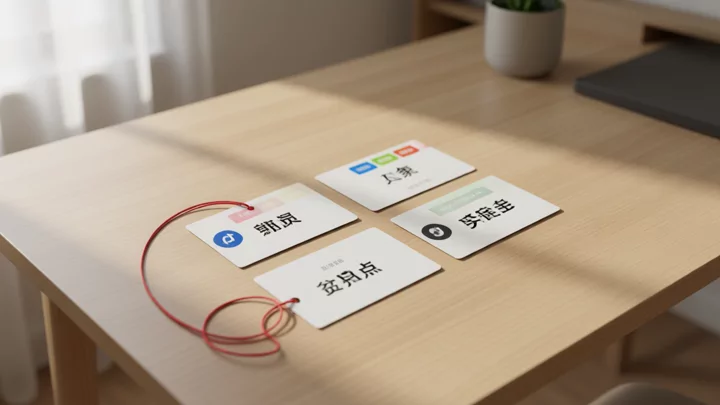
For 4–6 stores, the most common grouping error is slicing by country or store type, causing three dimensions to overlap. For example, grouping "2 Thai local stores + 2 Vietnamese cross-border stores + 1 Malaysian local store" by country results in the 2 Thai stores under the same business license being split across two operational units, mismatching the collection entity and immediately triggering entity consolidation during platform cross-validation.
- Primary grouping axis: operational unit. Use "collection entity + fulfillment method" as the first splitting dimension; stores under the same collection entity are assigned to the same unit.
- Naming convention: Country code-store type-sequence number, e.g., TH-LOCAL-A, TH-LOCAL-B, VN-CROSS-A, VN-CROSS-B, MY-LOCAL-A. Cross-border stores and local stores must not be mixed within the same unit.
- Personnel mapping: Each operational unit is assigned 1 store manager; the store manager's sub-account is linked only to stores within that unit; outsourced personnel can access only 1 unit.
The difference in the maximum number of cross-border stores versus local stores under a single business license — see How Many TikTok Shops Can One Business License Support?. For details on Profile isolation and proxy binding when running a multi-store cluster on a single workstation, see Running a Multi-Store TikTok Shop Cluster on One PC.
The Daily 4-Hour Rhythm: Fixed Actions for Switching, Inspection, and Loss Control
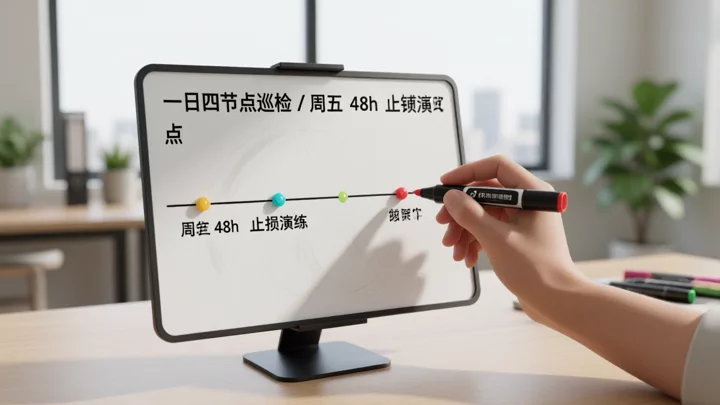
4 fixed actions that must be completed each day: 09:00 logistics tracking audit (cross-check yesterday's shipping records against tracking numbers store by store, paying special attention to whether sub-accounts have mistakenly operated on non-own-store tracking); 14:00 SPS / health score quick check (Seller Center → Store Health, refresh all 6 stores one by one, immediately log any store scoring below 60); 17:00 sub-account operation log audit (verify that outsourced and customer-service sub-accounts have not exceeded their scope of action today); 20:00 ad account balance and restriction status check (in Business Center, review each account for any triggered TikTok Advertiser Policy restrictions). Every Friday, run a 48-hour loss-control drill: simulate three scenarios — cross-entity payment, sub-account logistics contamination, and ad account restriction — and record the time to loss containment. Logistics tracking audits and SPS quick checks must not be outsourced to third-party tools, as the tool authorization itself may introduce new sub-account cross-contamination; operation log audits and ad balance checks can be automated via scripts.
Top 5 Frequent Pitfalls: From Payment Cross-Contamination to Ad Account Restrictions
The following 5 types of incidents are ranked by average 48-hour stop-loss time from highest to lowest (illustrative relative metrics, not actual statistics):
① Multiple stores sharing a single payment account.Friday 16:30 — Finance discovered that 3 stores had the same withdrawal card number. The platform completed its entity consolidation determination within 48 hours, subsequently triggering simultaneous SPS point deductions across all 3 stores. Loss mitigation: Immediately split the shared card number into independent withdrawal cards for each store, submit an entity explanation letter, and simultaneously suspend ad accounts to prevent further cross-contamination in the funding chain. Preventive configuration: The payment entity must correspond one-to-one with the store's registered entity. See the split logic in What happens when multiple stores share one payment account.
② Sub-account logistics tracking crossover.Thursday 11:50 — A customer service sub-account confirmed a false shipment record for the 1st store in Thailand in the logistics backend (which should have belonged to that store), triggering a cascading violation. Loss mitigation: Withdraw the confirmation, file a logistics record correction appeal with the platform, and freeze the sub-account's logistics permissions for 72 hours. Prevention: Strictly limit sub-account logistics permissions to "read-only for own store"; confirmation and re-routing operations may only be executed by the store manager.
③ TikTok Ads account entity mismatched with store.Monday 10:00 — During ad account creation in Business Center, the operations team entered a Vietnamese company tax ID, but the linked store was a Thai local store, triggering an account restriction. Loss mitigation: Unlink the incorrect account, re-register with the correct entity, and submit an entity consistency declaration. Prevention: Before opening an account, cross-reference Business Center Setup Guideto confirm that the ad account entity matches the store's registered entity.
④ Same business license exceeding the limit triggers secondary review rejection.Tuesday 09:20 — The 5th store received a secondary review notice stating "duplicate registered entity." In reality, the local stores under the same business license had already hit the per-country cap. Loss mitigation: Withdraw the 5th store's application and merge 2 of them into 1 operating unit to reduce the entity count. Prevention: Before opening a store, verify Store Group Quantity Limits and Multi-Store Practice in a Single Country the three-tier cross-validation threshold.
⑤ Duplicate influencer outreach within the same account pool.On Wednesday at 14:00, Operator A and Operator B simultaneously sent invitations to the same batch of influencers. The influencer dashboard displayed 2 duplicate requests, triggering the invitation frequency cap. Loss mitigation: consolidate the invitation records, send a unified confirmation to the influencer, and refrain from duplicate outreach within 72 hours. Prevention: route all influencer invitation entry points through the store-manager sub-account; operators are limited to “drafting” and cannot “send.”
2026 Rule Changes: Ads Permission Granularity and SPS Weight Adjustments
This quarter, 2 permission adjustments are required. First, TikTok Business Center has separated the Finance role from Standard Members. If your team still places finance staff within the Standard Members group, you must migrate the finance sub-accounts to the dedicated Finance role by the end of 9 to prevent a finance misoperation on ad assets from triggering Advertiser Behavior Policy violation. Second, in the 2026 SPS scoring system, the weight for logistics violations (including false shipments and tracking anomalies) has been raised compared to 2025. The 150-point AHR threshold for major sales has a more pronounced cumulative impact on multi-store matrices—a single store with an SPS below 70 will affect the entire operating unit’s eligibility to register for major sales. It is recommended to complete a full-store SPS baseline audit within this month and schedule stores scoring below 70 for remediation in the next cycle.
Frequently Asked Questions
How many stores’ logistics back-ends can a single sub-account be linked to at the same time?
It is recommended that 1 sub-account be linked to only 1 store’s logistics permissions. If staffing is tight and you must link 2 stores, both stores must belong to the same operating unit and the same payment entity; otherwise, when tracking data crosses over, ownership cannot be determined within 48 hours.
After grouping multi-stores, is the influencer invitation quota calculated per store or per account pool?
Calculated independently per store. However, when multiple stores under the same legal entity share a single creator account pool, duplicate outreach will still trigger frequency capping. Therefore, the invitation entry point should be unified under the store owner's sub-account, with operations staff only drafting copy.
Can cross-border stores and local stores be placed in the same operational unit?
Not recommended. The logic for registration entity, payment collection, and logistics fulfillment differs entirely between the two (see Item-by-Item Comparison of Cross-Border and Local Stores). Mixing them will cause group naming conflicts and break the secondary review verification chain.
How long does it take for a TikTok Ads account to be restored after a restriction?
After submitting the entity consistency declaration, the platform typically completes its review within 3–5 business days. If the restriction was triggered as a result of a logistics SPS issue, the SPS must be resolved before submitting a review request. Specific timelines are subject to the account notification.

