



The same Chinese business license was used to open a 3rd local store in Thailand. Within 48 hours of submission, the SPS of the first 2 stores dropped sharply, and the 3rd store was outright rejected at the secondary review. The backend notification simply stated "legal representative ID information does not match the registered entity." The team verified the legal representative's name in pinyin character by character—a perfect match. The real blocker was that the passport had less than 12 months of remaining validity, compounded by the payment account being registered under a different affiliated company, leaving the three entity layers misaligned.
This is not an isolated case. What determines how many TikTok Shops a single license can open has never been the number of licenses itself, but the three-layer cross-verification across the registration entity, payment-receiving entity, and logistics entity. Below, following the chain of quota → registration workflow → secondary review logic, we break down the registration thresholds and secondary review differences between cross-border stores and Southeast Asian local stores.
How Many TikTok Shops Can One License Actually Open: A Quota Table by Store Type and Country
Under the same business license, the TikTok Shop cross-border store cap is 1–2; local stores in Thailand, Vietnam, and Malaysia are each limited to 1–3. The key question is not "how many more can I open," but whether each store can stand independently across the three dimensions of registration entity, payment-receiving entity, and logistics entity. When three local stores share the same license, if the first two have already claimed the logistics contract ownership or payment channels, the secondary review will trigger a cross-verification failure for the 3rd.
For the practical layout of a multi-store matrix within a single country, we recommend starting with a minimum viable unit of "1 cross-border store + 2 local stores," then deciding whether to expand to a 3rd local store based on SPS and AHR performance. For the complete cross-country quota comparison and compliance boundaries across store types, refer tothe maximum number of TikTok Shops a single business license can register and the Southeast Asia matrix layout.
Registration documents for cross-border vs. local stores: it's not just a few extra fields — the entire entity chain is fundamentally different
The entity chain for a cross-border store is: Chinese business license → Chinese legal representative ID → cross-border logistics provider → USD or RMB receiving account. A local store follows a completely different chain: local business license or authorization agreement → local legal representative/authorized person ID → local logistics provider → local currency receiving account. The two chains share no overlap at the document level; there is no shortcut of "just filling in a few extra fields on the cross-border store documents to convert it into a local store."
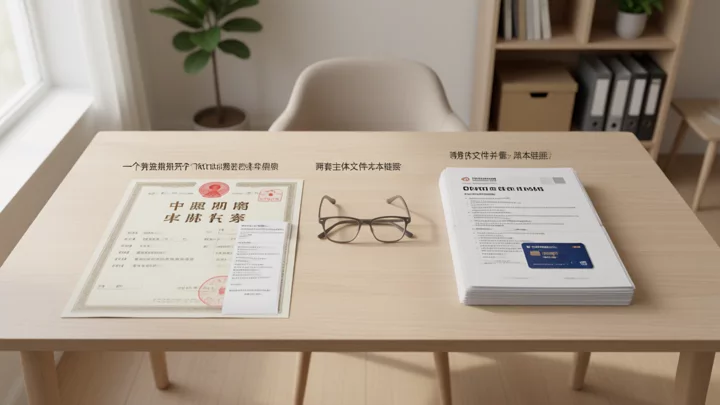
| Document Item | Cross-Border Store (Chinese Entity) | Local Store (TH/VN/MY) |
|---|---|---|
| Business License | Chinese Business License (sole proprietorship or corporate entity, both acceptable) | Local company registration certificate or cross-border authorization agreement |
| Legal Representative Identification | Chinese ID Card (front and back) | Local legal representative passport/ID (validity ≥12 months) |
| Logistics Contract | Cross-border logistics service providers (Cainiao, Yunexpress, etc.) | Local logistics service provider cooperation contract |
| Payment receiving account | USD/CNY corporate or Alipay account | Local currency bank account (account name must match the registered entity) |
| Additional verification | None | Local legal representative verification (government-side API or manual verification) |
Taking a Thailand local store as an example, registration requires a copy of the Thai legal representative's (or authorized agent's) passport, Thai company registration certificate (or cross-border authorization letter), local logistics contract, and Thai local bank payment information. A cross-border store only needs a Chinese business license and the legal representative's ID card. Running 1 cross-border store plus 2 Thai local stores simultaneously means maintaining two entirely different entity documentation systems. For a detailed item-by-item comparison of document differences and costs, seeComparison of registration documents and operating costs between cross-border stores and Southeast Asian local stores.
What Exactly Does the Second-Stage Review Check: The Three-Layer Cross-Verification Causal Chain
The second-stage review is not simply "going through the materials again"; it is a step-by-step verification along a three-layer causal chain. Local stores have one additional layer of local legal entity verification compared to cross-border stores, and a break in any of the three layers triggers a full-group re-review:
- Registration Entity Layer:Document validity (passport/ID card remaining validity ≥12 months), entity type consistency (sole proprietors cannot register local stores), and the legal representative name spelling must match the registered entity name character by character.
- Payment Entity Layer:The account-holding entity for the receiving account must be identical to the registration entity or a related entity under the same controlling person; cross-company affiliation is not permitted.
- Logistics Entity Layer:The logistics contract signatory, shipping address, and tracking-data reporting entity must correspond to the registration entity or its authorized party; otherwise, it will be flagged as a logistics violation (false shipping).
The fourth-layer verification unique to local stores is local legal entity verification: Thailand, Vietnam, and Malaysia require the legal entity document to match the business license registrant character by character, and the passport validity must extend at least 12 months beyond the submission date. If the legal representative passport for the 3rd store is about to expire while the first 2 stores have already locked in older file versions, the second-stage review system will flag "version inconsistency," triggering SPS re-review of the earlier stores as well. For high-frequency rejection scenarios and item-by-item troubleshooting paths, see A Step-by-Step Troubleshooting Guide for Repeated Rejection in TikTok Shop Second-Stage Review.
FAQ
How soon can you resubmit after your local store's second review is rejected? Do you need to replace all documents with a new version?
You may resubmit within 7 days of rejection, but only the document layer flagged as abnormal needs to be updated (for example, if only the passport has expired, you only need to replace the passport copy). All other unflagged items should remain in their original version. If three layers are broken simultaneously (entity + payment + logistics), you must completely re-fill the form and go through the legal representative verification process again.
Can a cross-border store and a local store under the same business license share the same receiving account?
No. Cross-border stores process payments through USD/CNY channels, while local stores must use a bank account in the local currency, with the account holder name matching the registered entity. Forcibly sharing an account will cause the payment entity layer cross-verification to fail, triggering a second review re-audit. It is recommended that each local store in a given country opens its own independent local account, and the cross-border store separately binds Alipay or a corporate USD account.

