



6 hours after the 7th Vietnamese local store submitted for secondary review, the SPS scores for both the Thailand and Malaysia store groups under the same payment entity dropped from 82 to 54. The Black Friday enrollment threshold of AHR 150 points was simultaneously breached, and the TikTok Ads account was flagged as restricted. The root cause identified in the incident post-mortem was not "opening one more store"—it was that all three store groups shared a single payment link, one ad account, and one logistics routing path. The flat-lay inertia of one-country multi-store operations had been carried straight into the multi-country matrix. Scaling from 1-3 stores to 10 is not about "how to register more"; it is about re-cutting the grouping architecture along three threads—payment entity, ad account, and logistics routing—then working through registration sunk costs, monthly fixed costs, and variable costs line by line.
The Flat Layout Crashes at Store 7: The Ceiling of One-Country Multi-Store Thinking
"Adding one store = opening one more browser window" is a model that holds up to 3 stores. The SPS linkage mechanism means all stores under the same payment entity share a single health-score pool. When the 7th store triggers secondary review, the platform performs cross-verification on the entire entity, pulling the logistics tracking history, return rates, and influencer invitation records of the first 6 stores into the re-review scope. The result: SPS scores for both the Thailand and Malaysia groups plummet within hours, and Black Friday enrollment eligibility is immediately invalidated.
A more hidden break sits on the ad side: once a TikTok Ads account is tied to a store, multiple stores under the same Business Center share a bidding budget pool. If one store's SPS restriction renders its bidding strategy ineffective, it drags down the impressions of other stores in the same group. Linear store expansion can hold at 3 stores with the "more browser windows" approach, but by 5–7 stores the payment, ad, and logistics threads must be independently severed; otherwise, any single-point failure will propagate laterally along the shared chain. For specific grouping and sub-account configuration, refer toMulti-Store Grouping and Sub-Account Configuration for Managing 10 TikTok Shop Store Clusters on One Computer.
Matrix Grouping Architecture: Three Groups × Store Type × Entity—Not Cut by Country
The first principle of grouping is not "one group for Thailand, one group for Vietnam," but rathereach group is bound to an independent payment entity, an independent TikTok Ads account, and an independent logistics routing, country is a natural outcome rather than the splitting dimension. Specifically, across the 10 stores in Thailand, Vietnam, and Malaysia:
- Thailand Group (4 stores): 1 cross-border + 2 local + 1 creator-invitation type, with payments routed through Thailand's local settlement channel and logistics tied to Thailand's 3PL warehouse
- Vietnam Group (3 stores): 1 cross-border + 2 local, with payments settled in Vietnam's local currency and logistics handled as domestic parcels within Vietnam
- Malaysia Group (3 stores): 1 local + 2 creator-invitation type, with payments routed through the MYR channel and logistics tied to Malaysia's 3PL
The logic behind mixing store types within a group: cross-border stores handle new-product testing and cross-border logistics margins, local stores take on live-streaming GMV and creator invitations, and creator-invitation stores focus on content-side traffic. All three store types share one set of payment and logistics, but each store's backend is independent—a single store's violation does not drag down the entire group's SPS.
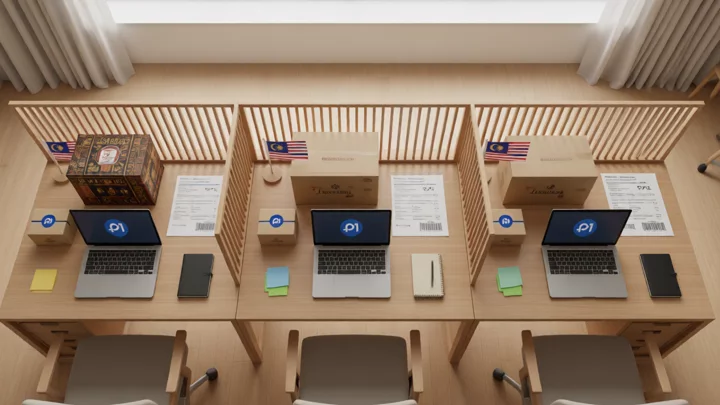
Licenses and Second Review: Where the Chain Breaks When Expanding to a Second Country
The quota per business license on TikTok Shop is calculated separately by store type and country: cross-border stores are capped at 1-2, while local stores in Thailand, Vietnam, and Malaysia allow 1-3 each. What truly constrains the number is the three-layer cross-verification of registered entity × payment entity × logistics entity, not the number of licenses. SeeRegistration Thresholds and Second Review Differences: How Many TikTok Shops One Business License Can Open.
High-frequency break points when expanding to a second country:
- Legal entity verification: Cross-border stores use a Chinese legal entity's passport, while local stores require a local legal entity or authorized representative. If the same legal entity appears in the registration information of both a Thai and a Vietnamese local store, an "entity overlap" flag is triggered, and the document review is rejected outright.
- Local store documentation: A local business license, tax registration, and local bank statements are required, which is entirely different from the Chinese entity chain used by cross-border stores. Cross-border store registration uses a Chinese entity + cross-border logistics + USD/CNY payment collection, while local stores require a local entity or authorization + local logistics + local currency payment collection. CompareRegistration Documentation and Operating Cost Comparison: Cross-border Stores vs. Southeast Asian Local Stores.
- Second-review chain: When the 3rd local store is submitted, the platform performs a retrospective verification on all previously reviewed stores under that entity. If the first 2 stores have missing logistics tracking or false shipment records, they will be pulled into the secondary review as well. For the investigation path, refer toTikTok Shop Secondary Review Failure: Legal Entity Verification and SPS Score Drop Troubleshooting Checklist.
Monthly Cost Breakdown of a 10-Store Matrix: From Registration Sunk Costs to Operational Variable Costs
Registration Sunk Costs (One-Time): Local store agency service 3000-8000 CNY/store (including notarization, translation, and entity setup); cross-border store documentation preparation ~1500 CNY/store. First-year sunk cost for 10 stores is approximately 4.5-7 wan CNY, the largest upfront investment that determines the pace of expansion.
Monthly Fixed Costs (Per Store): Platform commission 2%-5% (variable based on GMV); sub-account seats 0-300 CNY/month/store (depending on whether third-party multi-store management tools are used); tool subscription allocation 100-200 CNY/store/month; staffing at 1 operator per 3 stores, monthly salary 8000-12000 CNY. Monthly fixed expenditure for 10 stores is approximately 1.8-3.2 wan CNY (excluding commission).
Variable Costs: Logistics (cross-border parcels 15-30 CNY/order, local parcels 5-12 CNY/order); advertising CPM in Southeast Asia 2-5 CNY per thousand impressions; influencer commission 10%-20% of GMV. Variable costs scale linearly with order volume, but per-store marginal cost begins to decline beyond 6 stores due to consolidated logistics and merged ad budgets, then rises again at 10 stores as compliance review workload increases.
From 3 stores to 6 stores, the average monthly total cost grows by 68% (less than a doubling of store count), demonstrating that shared logistics and ad budgets generate economies of scale. From 6 to 10 stores, growth is 46%—the marginal increase narrows, but labor costs for compliance audits and second-round review responses begin to rise. The break-even point depends on your average order value and ad conversion rate, but 10 stores require a monthly GMV of approximately 12–18 wan CNY to cover all fixed and variable costs and generate a gross margin of 15% or above.
Operational Infrastructure: How to Configure Sub-Account Permissions, Environment Isolation, and Logistics Routing
The key to running 4–6 Profiles on a single workstation is isolation, not quantity. Each Profile corresponds to a group of stores (under the same payment entity), and the browser fingerprint, cookie domains, and IP egress points must all be independent. A workstation with 16 GB of RAM can stably support 4–6 Profiles; beyond 6, it is recommended to split them across a second machine to avoid Profile state loss caused by memory swapping.
Sub-account permissions are configured by group logic: a group administrator has full operational authority over all stores in their group but cannot view payment or ad data across groups. Role assignment in TikTok Business Center follows the principle of least privilege—admin, standard member, and finance roles each correspond to different asset scopes, preventing shared login credentials from triggering account anomalies. Official documentation on role-to-asset binding can be found atTikTok Business Center Roles and Permissions Documentation.
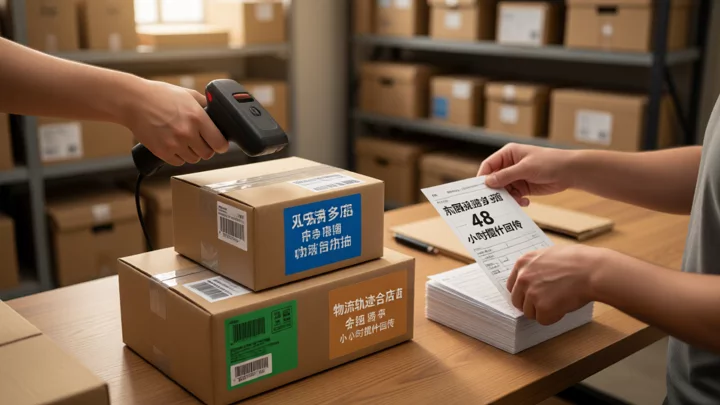
Logistics tracking compliance is a core SPS deduction item. Local stores must use platform-approved local 3PLs and upload pickup scan codes within 48 hours of dispatch; cross-border parcels must go through official logistics channels, with tracking covering three segments: outbound dispatch, customs clearance, and last-mile delivery. Fake shipment (uploading a fraudulent tracking number or a delay exceeding 72 hours) directly triggers a logistics violation, resulting in an SPS deduction of 5-10 points. Two consecutive triggers result in store traffic throttling.
Aligning TikTok Ads accounts with stores: one independent Ad Account per group, bound under Business Center by group, with independent ad budgets and no cross-group reuse of audience packages. When an account is restricted, first confirm whether it was triggered by a sudden SPS drop on an associated store, then reviewTikTok Advertiser Account Policyfor behavioral compliance items. A systematic overview of cross-platform multi-account coordination can be referenced inKey Considerations for Selecting Multi-Account Operations Tools on TikTok Shop.
FAQ
If one business license is used to open local stores in both Thailand and Vietnam simultaneously, will it trigger entity overlap?
Yes. The platform performs cross-verification using a three-tuple of "legal representative + business license + payment account." When the same Chinese business license is used to register local stores in both countries at the same time, the legal representative verification step is highly likely to flag entity overlap. The solution is to use independently registered local entities or authorized representatives in each country; the Chinese license is reserved for the cross-border store channel only.
Do sub-accounts in a 10-store matrix need to purchase third-party tool seats?
Not mandatory, but for 10+ stores, relying solely on the platform's built-in sub-account management leaves permission granularity and operation auditing insufficient. If your team exceeds 4 people and cross-group operations are frequent, purchasing seats in a multi-store management tool per group (approximately 100-300 CNY/person/month) is safer than sharing admin accounts and makes it easier to isolate operation logs by group.
Black Friday registration: AHR score of 150 is not met—do you only need to fix one store, or does the entire group have to improve?
AHR is calculated at the store level, not the group level. However, under the SPS interlocking mechanism, a sudden SPS drop at any store within the same group's payment entity will drag down the entire group. In practice, it is recommended to run SPS inspections on a group basis and prioritize the lowest-scoring store within the group for fixing logistics and creator outreach records, rather than spreading effort evenly across every store.
If a TikTok Ads account is flagged as restricted, will ads from other stores in the same group stop running?
Yes. When an Ad Account under the same Business Center is restricted, all ads from stores linked to that account are paused. Therefore, when organizing groups, each group must be linked to an independent Ad Account so that a restriction on one group does not affect the others. Recovery requires waiting for the platform's re-review or filing an appeal through the official process; creating new accounts to circumvent the restriction is not permitted during this period.

